Thursday, September 12, 2013
Ode to an Anonymous Commenter
Wednesday, September 11, 2013
The Myth of the Foodie
Foodies are also under the impression that they have a special talent for liking food. That they, in secret, have discovered food that has been expertly prepared is "like ya know, good, man." Like they possess sommelier-like powers of taste that can, after biting into a $100 lamb chop, deduce the exact place, date and time a young sheep was put to death. Also, if any lamb relatives were present at the funeral and if they are also currently being served at a nearby table.
So what does it take to become a foodie you ask? Absolutely nothing. How many years must one train themselves before one can pass the foodie test and earn their Michelin stars? (don't bother reading that wiki review, you won't find foodie anywhere) None. Being a foodie is not a skill. Despite what lies they like to tell you, and more importantly themselves, anyone can call themselves a foodie and be just as qualified as any idiot walking down the street. That's right, The Burger King Kids Club has more restrictions than being a foodie has ever had.
All foodies suffer from the delusion that the reason they enjoy gourmet food and the huddled masses enjoy fast food is out of pure choice. They are completely blind to the fact that given the option of a free meal consisting of either their favorite cheap fast food or a four course meal of their choosing prepared by a four-star chef in a five-star restaurant, everyone chooses the fine dining and you don't have to be a food genius to figure it out. They completely ignore the only discernable requirement of being a so-called foodie, price, and spit in the faces of everyone forced to eat below their standards because they believe the ability to buy more expensive food somehow makes you appreciate it more.
You know who truly appreciates food? Homeless people and starving children.They appreciate food so much they beg for it, pray for it and even shed tears over being offered some soup and bread. That's food appreciation. That's putting your heart and soul into enjoying every meal like it's your last.
So go ahead foodies. Waste some people's weekly salary on food that's photogenic and takes an hour to prepare by blind monks flown in from parts unknown. Really, I mean that. Don't stop. I'd hate for all that time and effort and money to go to waste instead of being used to properly inflate the ego of a self-possessed egomaniac who's chosen to add to their own self worth the mundane ability to "appreciate" the one thing most Americans already take for granted because they've realized they're not special.
III,
Friday, February 1, 2013
Lincoln: A Review
This film, much like the eponymous main character, needs no introduction. It follows arguably the greatest American President, through his greatest achievements, during the last months of his life. One of the great American directors, assembled a cast of brilliant actors and made a film that was well...great.
The film takes a very close examination of the process surrounding the passage of the thirteenth amendment to the Constitution. We as an audience are the better for it, as we are introduced to a band of lesser known historical figures, all of which play important roles in their own right. The film truly triumphs by showcasing the political climate of the time and presenting arguments just as valid today as they were back then. Where many other films based on true events fail, (I'm looking at you Argo) by not creating enough tension for an outcome the audience is already aware of, Lincoln thrives by focusing on the impact the ultimate decision will have on the country as a whole as well as on a personal level with the individuals involved. Thus raising the stakes and providing more depth to the story.
The brilliance of the cast begins and ends with one man, Daniel Day-Lewis. He brings incredible humanity to a man who most of us have only experienced as a marble statue or quite possibly through Henry Fonda's performance in "Young Mr. Lincoln" (1939). In my opinion, Lewis should secure his third Oscar, placing him above all other males in history. Sally Field is a tenacious Mary Todd Lincoln and Tommy Lee Jones is a true force as Thaddeus Stevens, a fiery representative pushing for the abolition of slavery. David Strathairn makes yet another solid case for being the best supporting character actor of all time as Secretary of State William Seward. The backbone of the political gamesmanship comes from three characters played expertly by James Spader, John Hawkes and Tim Blake Nelson.
Lincoln is an entertaining history lesson, that showcases professional film making as well as acting.
Snobby Art House Rating - A
Thursday, January 31, 2013
Les Miserables: A Review
Multiple : United Kingdom : Rated - PG13 : Running Time - 158 mins
Les Miserables is in the pantheon of most beloved musicals of all time. Adapted from Victor Hugo's epic 1862 novel of the same name, Les Miserables is as grand in scale on film as it is in volume of literature. The story is set in post-revolutionary France and centers around ex-prisoner Jean Valjean who, after serving his time and breaking parole, decides to reinvent himself and begin a new life while being obsessively pursued by Javert, a policeman determined to put him away for life. Valjean agrees to become caretaker to Cosette, the daughter of Fantine, a seamstress once under the employ of Valjean and subsequently forced onto the streets. Cosette grows up and falls in love with Marius, a young man deeply involved in the anti-monarchist movement currently gaining strength in the Parisian underground. Valjean must decide between protecting Cosette as he has sworn to do and allowing her to live her own life.
Tom Hooper, known previously for earning his Oscar for directing with 2010's "The King's Speech," should be commended for engineering a very bold attempt at capturing everything Les Miserables has to offer. Hooper's vision for revamping Les Mis was to have the actors sing live while acting, as opposed to traditional practices of having actors lip sync to music previously recorded in the studio. A change that would try and break down the wall between film and live stage performance. A change that also has a lot to do with the flaws of the film. In solo instances the performances can be very moving but in ensemble numbers the mix between live singing and recorded background becomes very muddled causing many of the lyrics to be missed. Secondly, the point of allowing the actors freedom to sing live provides them the advantage of having their acting influence the music not the other way around. This should make for a more captivating experience, however it is very rarely capitalized on and most scenes are so sweeping in scale, that the personal, stage-performance feel is lost.
The cast of Les Miserables truly define ensemble as the film is so evenly balanced with incredible talent. Hugh Jackman was born to play Jean Valjean and doesn't disappoint. Russell Crowe (Javert), despite harsh criticisms of his performance is not all that bad. It seems the role is more out of his vocal range and suffers more for that than his acting performance. Award show darling Anne Hathaway (Fantine), does an amazing job in this film, albeit for five minutes. If you are expecting a gripping, two hour, career defining performance, you will be disappointed. Amanda Seyfried (Cosette) and Eddie Redmayne (Marius) are quietly impressive and provide hope for the future of the acting landscape. While young Daniel Huttlestone is very entertaining as Gavroche, a rebellious little boy.
This brings me to my favorite parts of the film. Sacha Baron Cohen, Helena Bonham Carter and Samantha Barks. Cohen and Carter, dressed as though they just stepped out from a Tim Burton movie (God knows they probably were) and as if they were performing these roles in their spare time, absolutely steal this film. As Monsieur and Madame Thenardier, their "Master of the House" number is the highlight of the entire film. Samantha Barks making her motion picture debut, was astounding as Eponine, a role she played for the Les Miserable 25th Anniversary Concert. Her role provides incredible heart to a film that can be so overwhelming at times it glosses over its emotional core. In my opinion she gives the best singular performance of the film.
Les Miserables is an experience that can be captivating at times and very convoluted at others. In my opinion it will always be best enjoyed live on stage where the emotion can be felt more effectively and performances appreciated more accurately.
Snobby Art House Rating - B
Monday, January 28, 2013
Amour: A Review
Saturday, January 26, 2013
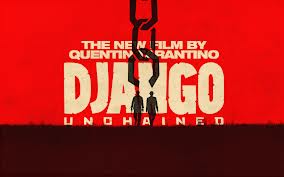
Django Unchained: A Review
Django Unchained is the latest blood-soaked vengeance tale from writer/director Quentin Tarantino. It follows Django, a slave who sets out on a mission to free his wife Broomhilda after being liberated by the aptly named bounty hunter Dr. King Schultz. Schultz needs Django to identify a band of outlaw brothers that he has been unable to track down. In exchange for his help, Schultz promises to aid Django in his quest to find his wife. Django earns his freedom, receives training in the art of death, a new set of clothes and the two set off to free Broomhilda from the evil plantation owner Calvin Candie, dispatching their own brand of justice along the way.
True to form, Tarantino delivers another gritty melange of genre defining standards, infused with his own brand of edgy banter and doused in plenty of claret to satisfy even the most jaded of fan boys. An abundance of racial slurs and a Monty Python-esque caveat involving members of the Kyu Klux Klan will undoubtedly cause some viewer's skin to crawl with apprehension but not nearly as much as the scene with the dancing horse. (that is not a joke)
Christoph Waltz plays Dr. King Schultz and his cold-blooded, matter of fact attitude carries the film until Leonardo DiCaprio shows up. Jaime Foxx is serviceable as the leading man but is much better when he doesn't speak. DiCaprio continues to grow stronger with each passing role and turns in a truly menacing performance. Samuel L. Jackson plays "Stephen" a house slave who proves to be much more cunning and devious than he appears. Kerry Washington doesn't get enough screen time to make an impact on the film and serves only as the prize at the end of the journey.
Overall, Django Unchained is another quality addition to the Tarantino cannon.
Snobby Art House Rating - A-
Monday, January 21, 2013
Beasts of the Southern Wild: A Review
Beasts of the Southern Wild is the fantasy story of a little girl known as 'Hushpuppy' who is raised by her father 'Wink' in the Gulf of Mexico basin area of the southern United States known as "the bathtub." All seems well in her tiny community until Wink becomes sick and her world literally comes crashing down around her in the form of glaciers melting, sea levels rising and a massive storm. The storm also releases massive prehistoric "beasts" that have been trapped in the ice and they begin a film-long trek towards Hushpuppy and the other storm survivors. With their homes underwater, Wink, Hushpuppy and the small band of characters who call "the bathtub" home, attempt to rebuild their lives while avoiding starvation, disease and attempts from government officials to relocate them. Hushpuppy goes in search of her mother for answers and in the end must draw strength from her friends, neighbors and the sometimes harsh lessons her father used to raise her, in order to face the beasts of an uncertain future.
Quvenzhane Wallis is spectacular as Hushpuppy, the fearless and curious main character. Most of the film's charm can be traced to Hushpuppy's childish interactions with the world around her. More than just benefiting from being an adorable little girl, Wallis at times delivers a performance that draws emotions from a wisdom well beyond her years.
Dwight Henry plays Wink, Hushpuppy's father, who is a combination of protector and foil. Everything that rings true about Wallis' performance would not be possible without her opposite Henry. Dwight Henry is the hidden gem of this movie. His portrayal of a father determined to raise his daughter with a tough, no-nonsense attitude while at times displaying the demeanor of an overgrown child himself is gripping. The small group of actors cast in the background are an authentic and colorful group who more than capably tie the film together.
Overall this is a great little film. It should be applauded for its simple yet powerful story telling. With very minimal effects and great performances from everyone involved from top to bottom it is very poetic and gives hope to every film maker who champions simple elegance over hollow, grandiose, big-budgeted blockbusters.
Snobby Art House Rating - A
Saturday, January 19, 2013
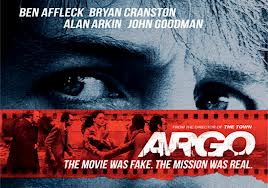
ARGO: A Review
Warner Brothers : USA : Rated - R : Running Time - 120 mins
Argo tells the story of an actual CIA mission to rescue the six members of the U.S. embassy hiding out in Iran, who escaped when the embassy was overrun by Iranian nationalists in 1979. After vetting several options the government decides to send in a lone agent to bring them home, getting them out of the country by posing as a Canadian film crew scouting a location for the fake Hollywood blockbuster film "Argo." The mission is successful, end of story.
Unfortunately that is the feel of this movie, straight forward, no nonsense and also no real drama. The film is based on actual events and I believe it is very difficult to make a movie suspenseful when your audience already knows how the events play out. The best films that are based on true stories and still find a way to be impactful find other aspects of the events or the people involved and bring those to the forefront to parallel the actual events in the film. Argo, unfortunately, stays focused on the mission the entire time and presents it as being pulled off without many hiccups. The two main road blocks in the mission provide no real drama because we ultimately know the mission is a success.
Ben Affleck directs his third feature film and once again proves he is much better behind the camera. The film is quick, it doesn't drag and none of the 2-hours are wasted. Affleck also stars as Tony Mendez, a specialist in extraction, who develops the idea of a fake movie, pitches the plan to his government bosses, puts the plan into action with the help of make-up artist John Chambers (John Goodman) and producer Lester Siegel (Alan Arkin) and flies to Iran to execute the plan, all the while having the emotional range of old wall paper. It's just there, existing in the background, like it's supposed to. He gets no help from the actors playing the roles of the embassy employees, who we never get to really know on any level other than their characters constant complaining about being rescued. Alan Arkin and John Goodman steal this film. They provide the comedy relief with biting criticism of the current Hollywood environment.
Basically, Argo is an interesting story where the actual material might be just as entertaining if not more entertaining than a film based on that material. Alan Arkin deserves any and all recognition he gets, but overall the film underwhelms.
Snobby Art House Rating - B-
Monday, November 5, 2012
Don't Vote with Your Wallet
This is a disturbing reality to grasp for anyone who believes in democracy and liberty and the whole "all men are created equal" thing. Wouldn't it make more sense for votes to count directly for the person being voted for and whoever has the most wins? It's hard convincing your friends and family to vote when they may not even get what they bargained for when trying to exercise one of the core freedoms our founding documents allow us to have.
It is easy to see how voters can become disillusioned about the Presidential election, with an awkward election process and an almost infinite sea of political jargon that is thrown at you up to two years in advance. By the time you step into the booth you've been told over and over how everything you believed about one candidate is wrong by another candidate whose own credibility has been destroyed by the other. The pros and cons of both start to meld together as the two candidates approach the actual election because they've come so far from the promises they made to their followers in the beginning that they are now just trying to say anything that anyone wants to hear. In that moment, the true enemy of freedom rears its ugly head. Apathy. That uncaring emotion that allows for all the B.S. reasons for voting to take control of your brain and allow you to rationalize voting for a particular candidate based on the flimsiest of excuses. This is how votes are wasted, this is how societal norms continue to constrain the minority of intelligent, forward thinking people in our country and how the political machine can continue rolling without any signs of changing, therefore subjecting another generation to the same apathetic tendencies.
If you haven't given up hope and decided to let the political machine eat you up, I believe there are a few pitfalls that you can navigate that would allow you to sift through the haze of political spin and allow you to vote and still look at yourself in the mirror in the morning with any ounce of sociological/philosophical respect. There are a lot of reasons to weigh when choosing who to vote for but I believe avoiding these reasons will allow you to focus on the other issues more clearly.
#1 Don't Vote with Your Wallet
Don't vote with your wallet. I know how it sounds, money to most people is the most important thing in the world, which is half the problem. Even if money doesn't completely rule your life most of you would probably argue that it's pretty damn important. From a day to day stand point you'll find little argument from me. However, when adjusting your world view to include an event that affects so many people like choosing the President, money begins to wain in importance when compared to war, civil rights and liberty. When you can realistically envision a scenario that includes the government telling you what career opportunities are available to you, who you can and cannot marry and what to do with your own body, the price of gas really doesn't matter much anymore. Human beings were here before money and we'll be here after money. If we all woke up tomorrow and decided that green paper rectangles didn't hold any value, they wouldn't. It's an illusion we've all agreed means something. That should show you the power of the human condition and just where money should fall on our list of things that actually matter. Women in this country, no matter how hard they work, are still being subjected to societal prejudices and are being restricted in their professional lives. They are being told that their bodies are not their own and someone else can decide what happens to it. It's hard to worry about the government taking money out of your wallet when their other hand is down your pants.
#2 Leave Your Religious Beliefs at Home
Leave your religious beliefs at home. This is another tough one but a very important issue that voters need to realize has absolutely no place in deciding who the president should be. Religion in some form is vital to our everyday lives but all religions aim to speak to you on a personal level. I don't think any rational person would argue that the founding fathers revolted against a country that had the power to religiously oppress them, in order to form another country where they religiously oppressed people. America is not a Christian nation, America is a nation that has a lot of Christians in it. Nearly all the founding fathers wrote papers on the subject of this country being a land of many faiths, despite their personal beliefs. Yet, most voters seem to think the election is some kind of holy war and the outcome of a certain faith taking control of the country depending on which faith you believe in, will surely usher in Armageddon. There are people in this country who do not have the freedom to live the life they want simply because the majority of people in power don't agree with them. That's how small and irrational that argument really is. It goes against every single tenet this country stands for when you vote to take away the civil rights of another human being because your religion says something different. Our constitution guarantees every citizen the right to life, liberty and the pursuit of happiness. It doesn't say "only the white, straight, Christians," no matter how much some people want it to.
#3 Do Not Vote Based on Looks
I can't believe I actually have to print this one but unfortunately I have actually heard enough people in my everyday life try and rationally defend this argument. Usually this is the bottom of the barrel voter who has already succumbed to the Apathy Party. Looks can be deceiving. Talk to anyone who was actually alive during the time when most Americans lost faith in the political system, Watergate. Anyone not entirely cynical will tell you that they were absolutely shocked by it. Richard Nixon was a charming, never raise his voice much less swear, Quaker for God's sake, who pulled the rug out from an entire country. This is America, there are plenty of good looking people to choose from, not all of them should be given power. Not a single winner of the Miss USA Pageant has been a serious contender for the presidency and there are very good reasons for that. Sarah Palin was a beauty queen and also a weather girl before becoming the Governor of Alaska (kinda) and she was almost Vice President. By those standards Al Roker is a swimsuit contest away from having the qualifications to nuke Iran.
We the people, are allowing this to happen. We the people, have a responsibility to fight for freedom if not for the sake of political ideology, for the sake of humanity. Have we really come 236 years to give all of this up now? Have we really decided to turn in our sense of right and wrong we honestly had as children for ideas so petty as money, religion or looks? I truly hope not. I truly hope that we take a long look at which side wants freedom and which side wants to keep the machine running. It's up to us. It's always up to us.
III
Monday, March 8, 2010
Tomorrow Today
News flash. The newspaper industry is dying and with it, I fear, journalism. Less and less people are tuning into the local news and 24-hour news has taken over the way people view the world. America has progressed to the point where it is not enough to read about what happened, we have to get an alert when the future is happening now.
The heart and soul of publishing has always been writing, but its blood is advertising, especially in mass production. The massive cost for materials, printing and transportation began to outweigh the revenue from sales and instead of trying to up the cost of words on a page to John Q. Public the industry tapped into advertising. Renting their bodies and becoming a carrier for advertisers to now penetrate the homes of millions of consumers.
The problems started the moment the news left the printed page and jumped onto the glowing screens. The glowing screens sat in our houses, our offices and our laps. The glowing screens were everywhere. The news now came to us; we no longer had to go to the news. Also there was less garbage, less recycling, just less. That’s what America is, more for less, or in this case, less for less.
Advertising and cost are main concerns but I would argue that the real killer of print and ultimately journalism as a whole is the philosophical change America made from demanding quality reporting to get the whole truth, to sacrificing quality in order to get some truth as soon as possible. The real reason 24-hour news has become so popular is the networks ability to pass off speculation as news. Journalism happens in several stages and it is very rarely instantaneous. There is fact checking, source verification and the arranging of information so as not to be misleading or trivial. The reporting of news is only one step in the process of informing the public. Reporting the news takes up only a fraction of the time in a news program so 24-hour networks fill the extra time with analysis. The problem with this is that only a small amount of news needs to be analyzed passed its original reporting. This is where the real genius of hyper journalism comes into play, when a story is rushed through the journalistic process to the news floor the story comes in broken pieces instead of one fluid entity. This allows the anchors and “experts” to try and predict what direction the story will take.
The 24-hour networks then try and create news of their own by speculating on the events they have reported. Why waste time on a news show that only informs you of the past when there are programs creating a future for you, right in front of your eyes, that you can use to decide how to live and vote and think? This is where journalism will die. We as a people are so time consumed that we are moving closer and closer to the abandonment of fact altogether and the embrace of an educated guess. If we do not decide to hold our information gatekeepers responsible for dealing in fact instead of speculation and demand quality reporting today, then journalism has no future in the world of tomorrow. With no reliable source to aid in discovering the truth, we will have no choice but to accept what the gatekeepers present as important and will continue to be susceptible to fear mongering that is based on shallow premises and a complete and utter indifference towards information that would help create a society of intelligent well-informed individuals capable of thinking for themselves.
III,
Saturday, January 16, 2010
Epic iFail: The Ballad of the Dust
Saturday, October 10, 2009
Dynamite!
Barack Obama, the 44th President of the United States, received the Nobel Peace Prize for 2009. The Nobel Peace Prize has been awarded 89 times to 119 Nobel Laureates between 1901 and 2008 – 96 times to individuals and 23 times to organizations. Since the International Committee of the Red Cross was awarded the Nobel Peace Prize in 1917, 1944 and 1963, and the Office of the United Nations High Commissioner for Refugees was awarded the Nobel Peace Prize in 1954 and 1981, that means 96 individuals and 20 organizations have been awarded the Nobel Peace Prize. Given to any other person at any other time and this is a cause for celebration. Only in America can the bestowing of an award meant to recognize the champions of hope and equality be met with derisiveness. The main argument being that President Obama hasn’t accomplished enough in his little over eight months as president. First of all, Barack Obama didn’t have to be president to be nominated for the award, so his accomplishments shouldn’t be confined to his presidency. Secondly, if by accomplished nothing you mean becoming the first minority candidate to be elected President of the United States, at the same time running on a platform of open discussion with all nations both friend and foe, political and ideological differences aside. The award was given to Barack Obama the man, not Barack Obama the President.
The Nobel Peace Prize (NPP) is different from other awards in the Nobel confluence of honors. It’s the only award that takes both the physical body of work as well as the intentional body of work equally into account. Not to say that the body of work and research performed by the laureates in other areas (physics, chemistry, medicine or physiology, literature and economics) won’t have an impact on future generations but these are areas of study where the bulk of the results are tangible. Peace, even when pursued by the most ardent of searchers, remains a constantly fleeting idea, and therefore the concept of peace must be reexamined and reaffirmed. So almost as important as the works themselves is the inspiration and hope that is fostered. The prize has been awarded to individuals as well as organizations such as International Physicians for the Prevention of Nuclear War, Amnesty International, International Labour Organization and the United Nations. Primarily based on their actions but also in recognition of the mere existence of their work, the fact that in the given times there is an entity willing to serve the harmony of the world whether anyone is listening or not.
In 1994 the NPP was awarded to Yasser Arafat, Shimon Peres and Yitzhak Rabin. These men are not exactly the leaders of a region known for amicable games of checkers let alone peace. The reason they received the award was because of their participation in the Oslo Accords, at the time a ground breaking effort to form an understanding between Israelis and Palestinians because the two sides were at least speaking in the same room to each other, but hindsight being what it is, the accord has had little to no effect on the stability of the region. Since then, Rabin was assassinated in 1995, Arafat never adhered to ceasefire protocol or realistically attempted to control the radical factions of the PLO and Peres was quoted recently reminding Iran that "it could be wiped off the map," this from a NPP laureate. Basically the award was given in promotion of the idea of peace in the Middle East, a Pavlovian reinforced behavior modification on an international scale. So, the concept of using the award as a reassuring slap on the back instead of a celebration of accomplished works is nothing new.
What I don't understand is the disdain and in some cases acrimony towards this man for receiving an honor, which some people don't believe he deserves simply because of a difference in policy, this being America after all. Any American should be proud that the elected leader of our country has, arguably, by his mere position, demeanor, and ideology impacted the view of the international community towards America in a positive way, especially in light of events in the past decade. The only way this country, or any country for that matter, will survive is through active cooperation with the other nations of the globe. Any attempt to cross social, political, economic and religious boundaries in an attempt to unite the world against the problems facing all of humanity not just individual countries should be acknowledged and supported. Hunger, fear, climate-control and social equality have no political affiliation or agenda. It will take everyone working together and communicating in peace.
III,
Monday, August 17, 2009
The Death of Country Music
1995 – The group “Lonestar” debuts on the Billboard Charts. Lonestar would later explode with crossover pop hit “Amazed.” Directly contributing to the success of such pop-country bands as Nickel Creek and Rascal Flatts by laying the ground work in both look and sound. Lonestar also fired original bass guitar player John Rich who after a failed solo career teamed with Big Kenny to form Big & Rich and create hip-hop country.
1995 – Faith Hill’s album “It Matters to Me” is delayed after she has surgery on her vocal chords. Later that same year she agrees to tour the following year with Tim McGraw. Hill breaks off a former engagement with her manager to date McGraw who had also recently broken off an engagement. The two are married on October 6, 1996. Hill then takes a three-year hiatus and records “It’s Your Love” with McGraw. Hill returns after record success with her duet with McGraw and focuses all of her energy on love songs, abandoning the somber and soulful melodies of "It Matters to Me." The duo strangleholds county music with their love albums for years.
After 1995 the entire landscape of the genre changed but hopefully with the advancements in personal recording and the increasing popularity of finding unknown artists on the rise the focus will come out of the lime light and recording studios and into the hearts of the songwriters and just maybe we can find our way back to Memphis.